How to Prevent Ice Dams
Reduce ice-dam risk with attic air sealing, balanced insulation and ventilation, clear drainage, and safe ground-level checks.
- Difficulty
- Intermediate
- Time
- 15 minutes to inspect
- Est. cost
- $0–$300+
- Season
- winter
By Keepstead Editorial Team · Published September 6, 2026 · 4 min read
Last reviewed September 6, 2026
Quick answer
Ice dams form when attic heat melts snow that refreezes at cold eaves. Reduce risk by air-sealing attic leaks, maintaining appropriate insulation, preserving soffit-to-ridge ventilation, and keeping gutters and downspouts functional. Do not climb onto a snowy or icy roof.
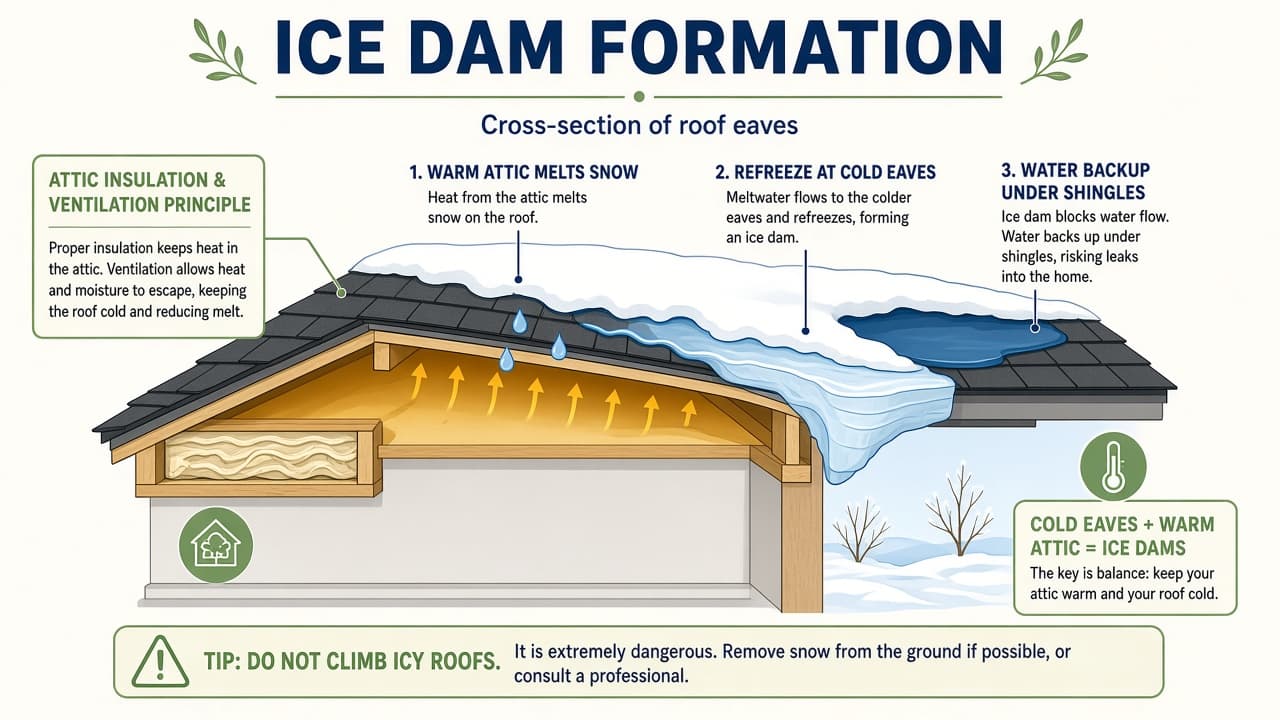
An ice dam is a ridge of ice near a roof edge. Meltwater can collect behind it and work under roofing, wetting sheathing, insulation, ceilings, and walls. Prevention focuses on keeping the roof deck consistently cold—not merely removing visible ice.
Why ice dams form
- Warm indoor air leaks into the attic through ceiling gaps, hatches, wiring penetrations, duct chases, or recessed fixtures.
- The warm attic heats the upper roof deck and melts snow.
- Meltwater travels down to the colder overhang.
- Water refreezes at the eave and gradually builds a dam.
- Additional meltwater pools behind the ice and may enter roofing joints.
Sun, roof geometry, snow depth, and outdoor temperature also affect formation. A house can develop ice dams even when gutters are absent; gutters are not the root cause.
Long-term prevention priorities
| Priority | Purpose |
|---|---|
| Air-seal the attic floor | Reduces warm, moist air leakage from living space |
| Add or correct insulation | Slows conductive heat loss |
| Preserve designed ventilation | Carries residual heat and moisture away |
| Seal and insulate ducts | Prevents concentrated attic heat |
| Maintain roof drainage | Helps water leave when temperatures rise |
Air sealing generally comes before adding insulation. Common leakage points can involve electrical fixtures, combustion vents, and fire-rated assemblies, so appropriate materials and clearances matter.
Keep ventilation pathways open
Attic ventilation must work as a system. Soffit intake vents and ridge or roof exhaust vents need clear airflow paths; insulation baffles can keep loose insulation from blocking soffits.
More ventilation is not automatically better, and powered fans can depressurize an attic or draw conditioned air through ceiling leaks. Have an insulation or roofing professional assess an unbalanced system rather than cutting new vents at random.
Gutters and downspouts
Before winter, clear leaves and confirm downspouts discharge correctly. Use the safe gutter cleaning guide and downspout maintenance guide. For layout considerations, see the gutter and downspout planning tool.
Clean drainage components reduce overflow and refreezing, but they will not solve attic heat loss.
Safe winter checks
- Look from the ground for thick ice at eaves, icicles behind gutters, and uneven snow melt.
- Check ceilings and exterior walls for fresh stains, peeling paint, or dampness.
- Inspect the attic only from a safe platform and only if conditions allow; look for frost, damp insulation, or roof-deck staining.
- Document patterns with ground-level photos for a contractor.
What to do if a dam is forming
From the ground, a purpose-made roof rake may remove fresh snow from the lower roof on some one-story homes. Follow the product instructions, stay clear of falling snow and ice, avoid overhead electrical lines, and do not use it from a ladder. Stop if the tool contacts roofing or requires excessive force.
For active leaks, move belongings, catch drips, and contact a qualified roofer or ice-dam service. Address wet insulation and electrical fixtures promptly.
Professional steam removal may be appropriate for an active dam. High-pressure washing, chipping, and indiscriminate salt can damage roofing.
Add ground-level checks and pre-winter drainage work to your winter home maintenance checklist.
Bottom line
Ice dams are primarily a building-heat problem. Correct attic air leakage, insulation, and ventilation, keep drainage clear, and leave icy roof access and active dam removal to equipped professionals.
Frequently asked questions
- What causes ice dams?
- Heat escaping into the attic warms upper roof areas and melts snow. Water runs toward colder eaves, refreezes, and builds a ridge that can hold water behind it.
- Do clean gutters prevent ice dams?
- Clean gutters support drainage but do not fix the main cause, which is uneven roof temperature. Air sealing, appropriate insulation, and correctly designed ventilation are the long-term priorities.
- Should I climb onto the roof to remove an ice dam?
- No. Snow, ice, steep surfaces, and hidden roof edges create severe fall hazards. Stay on the ground and hire a qualified, insured professional for roof-level removal.
Related guides
Winter Home Maintenance Checklist for Homeowners
Cold-weather prep: heating checks, freeze protection, safety devices, and exterior tasks—prioritized for homeowner-safe work.
How to Clean Gutters Safely
Clogged gutters overflow and damage foundations. Safe ladder setup, scoop-and-flush steps, cleaning frequency, and when to hire a pro.
How to Maintain and Improve Downspout Drainage
Improve gutter downspout drainage—clear clogs, add extensions, use splash blocks, and keep roof water away from your foundation. Know when grading needs a pro.
Ladder Safety: How to Use a Ladder Safely at Home
Essential ladder safety for homeowners—proper setup angle, three-point contact, working rules, ladder types, and when to hire pros instead of climbing.
This guide is for general informational purposes. Conditions vary by home, local codes, and equipment. See our disclaimer.