How to Clear an AC Condensate Drain Line
Recognize a clogged AC condensate drain, make safe homeowner checks, and know when water or wiring calls for HVAC service.
- Difficulty
- Intermediate
- Time
- 30–60 minutes
- Est. cost
- $0–$20
- Season
- summer
By Keepstead Editorial Team · Published September 6, 2026 · 6 min read
Last reviewed September 6, 2026
Quick answer
Turn cooling off if water is overflowing or the float switch has stopped the system. Find the drain only by tracing it from the indoor unit—layouts vary. Check the visible pan and accessible cleanout, remove loose buildup without opening equipment panels, and use a wet/dry vacuum at an accessible outdoor termination if appropriate. Never bypass a float switch or pour harsh chemicals into the line.
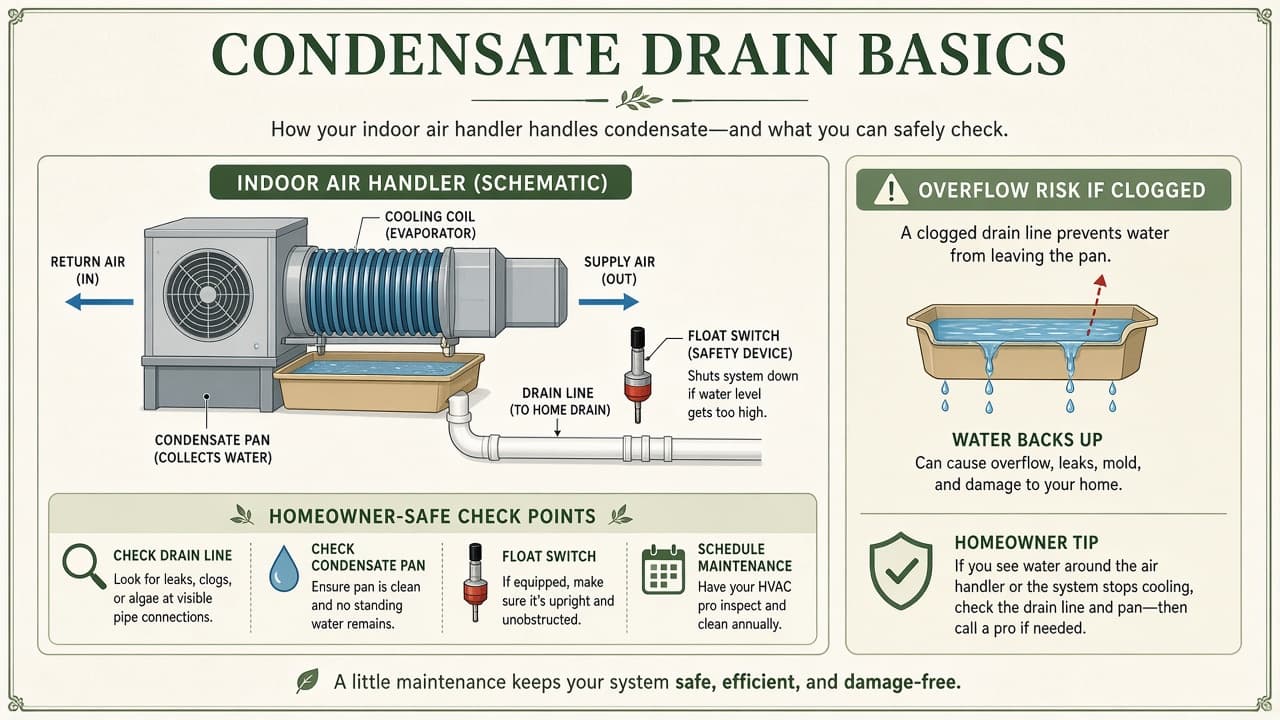
Air conditioners remove humidity as they cool. That water collects in a pan and travels through a condensate drain, trap, pump, or combination of those parts. Slime, dust, or algae can slow the line, but a cracked pan, frozen coil, failed pump, or poor drain slope can look similar.
If cooling itself is weak, start with why your AC is not cooling. Outdoor airflow maintenance is covered separately in how to clean AC condenser coils.
Signs the condensate drain may be blocked
| Symptom | What it may mean |
|---|---|
| Water in an auxiliary drain pan | Primary drain is restricted or equipment is leaking |
| Cooling shuts off while thermostat is calling | Float switch may have opened for high water |
| Water around the air handler or furnace | Drain, pan, pump, frozen coil, or another leak |
| Musty odor near the unit | Standing water or biological growth |
| Gurgling at a condensate pump | Pump or discharge problem |
| No outdoor dripping on a humid day | Possible blockage—but some drains terminate elsewhere |
Condensate volume changes with humidity and runtime. No visible drip by itself does not prove a clog.
Locate the drain safely
The indoor coil may be in an attic, crawlspace, closet, basement, garage, or above a furnace. Drain routing varies:
- A PVC line may leave the coil cabinet and run to a floor drain or outdoors.
- An auxiliary line may end above a window or doorway as an overflow warning.
- A condensate pump may lift water to a higher drain.
- High-efficiency furnaces may share nearby condensate routing, but the piping arrangement is model-specific.
Trace only visible piping. Do not open coil, furnace, air-handler, or electrical panels to find it.
Check the pans and float switch
Many systems have a primary pan inside the coil cabinet and an auxiliary pan beneath attic or overhead equipment. Homeowners should inspect only what is visible without disassembly.
- Look for standing water, rust trails, staining, or a wet ceiling below.
- If the visible auxiliary pan contains water, leave cooling off.
- Note the float switch position without forcing or bypassing it.
- Remove stored items from below the unit and protect the area from further drips.
A full auxiliary pan means the overflow protection is doing its job. Emptying the pan without correcting the source is not a repair.
Safe homeowner checks
1. Inspect the accessible cleanout
Some PVC drains have a capped vertical tee near the unit. If it is clearly a condensate cleanout—not a vent, trap primer, or unrelated pipe—remove the cap and look for standing water or loose sludge.
Wipe accessible residue with a disposable cloth. Do not push wire, screwdrivers, or drain snakes into the line; they can puncture fittings or pack debris into a trap.
2. Flush only as the manual directs
If the manufacturer calls for routine flushing, slowly add the specified amount of plain water or approved treatment through the cleanout. Stop if it backs up.
Do not mix chemicals. Avoid bleach, strong acids, lye drain openers, and foaming household drain products unless the equipment documentation explicitly approves a product.
3. Vacuum an accessible termination
If you can positively identify the condensate outlet outdoors:
- Turn cooling off.
- Connect a wet/dry vacuum hose to the outlet with a temporary rag seal.
- Vacuum for one to two minutes.
- Remove the vacuum and check the canister for slime.
- Flush from the cleanout only if permitted and confirm that water exits freely.
Do not use compressed air. Pressure can separate hidden PVC joints and cause leaks inside walls or ceilings.
If the system has a condensate pump
Do not disassemble or energize a wet pump. Confirm that its reservoir is not overflowing and that the plug and cord are dry. A failed motor, stuck switch, kinked discharge tube, or blocked check valve needs HVAC service.
Never plug the pump into an extension cord or defeat a switch that shuts the HVAC system down.
What not to do
| Avoid | Reason |
|---|---|
| Bypassing or taping down the float switch | Removes overflow protection |
| Pouring chemical drain opener into PVC | Can damage equipment and expose a technician |
| Blowing compressed air through the line | May separate concealed joints |
| Opening the coil cabinet | Sharp metal, electrical, and refrigerant hazards |
| Assuming every nearby pipe is the AC drain | Plumbing and HVAC layouts vary |
| Running cooling with a full pan | Risks ceiling, insulation, and structural damage |
Test after a simple clearing
Replace the cleanout cap as designed, dry the visible area, and restore cooling. Watch the pan and nearby fittings through one normal cooling cycle. Confirm drainage at the known termination if it is visible.
Stop if water returns, the float switch opens again, or the unit develops ice. Repeated overflow indicates more than a one-time loose clog.
When to call for service
An HVAC technician should diagnose equipment drainage first. If the restriction is in a shared sanitary drain or household plumbing, use when to call a plumber vs DIY to decide the next trade.
Prevent another blockage
- Replace filters on schedule so dust does not collect on the wet coil.
- Keep the accessible cleanout capped as designed.
- Have the pan, trap, pump, and line checked during seasonal service.
- Include a visual drain and pan check in your summer home maintenance checklist.
Bottom line
A safe condensate-drain check is visual and low pressure: cooling off, visible pan inspected, known cleanout checked, and an accessible termination vacuumed if appropriate. Standing water near electricity, repeated float-switch trips, hidden piping, and frozen coils belong with an HVAC professional.
Frequently asked questions
- How do I know if my AC condensate drain is clogged?
- Common signs include water in the auxiliary pan, moisture near the indoor unit, a full drain cleanout, a float switch shutting cooling off, or little drainage outside during humid cooling weather. These signs can also have other causes, so inspect before assuming.
- Can I pour bleach into an AC drain line?
- Do not use bleach unless the equipment manufacturer specifically allows it. Bleach can damage some drain pans, pumps, adhesives, and nearby materials. Plain water or the manufacturer-approved treatment is safer.
- Should I bypass the AC float switch to make cooling run?
- No. The float switch is designed to prevent an overflow and water damage. If it has opened the circuit, leave cooling off while you find the drainage problem or call an HVAC technician.
- Is an AC drain clog a plumber or HVAC job?
- A clog in the equipment's condensate pan, trap, pump, or dedicated drain is usually an HVAC service call. A shared building drain or concealed plumbing blockage may require a plumber after the HVAC side is ruled out.
Related guides
Why Is My AC Not Cooling? A Homeowner Troubleshooting Guide
AC blowing warm air or weak airflow? Use a symptom table for thermostat, filter, vents, condenser, frozen coil, and condensate—then know when to call HVAC.
How to Clean AC Condenser Coils Safely
Clear debris and gently rinse outdoor AC condenser coils without damaging fins, wiring, or refrigerant components.
When Should You Call a Plumber Instead of DIY?
Toilet running, slow drain, or leak at the wall? See which plumbing jobs are safe DIY—and which need a licensed plumber before you start.
Summer Home Maintenance Checklist: What to Check Before the Heat
Before peak heat: test AC, change filters, check drainage, and test safety devices. Summer tasks for cooling, exterior, and pro-only work.
This guide is for general informational purposes. Conditions vary by home, local codes, and equipment. See our disclaimer.