How to Clean AC Condenser Coils Safely
Clear debris and gently rinse outdoor AC condenser coils without damaging fins, wiring, or refrigerant components.
- Difficulty
- Intermediate
- Time
- 45–90 minutes
- Est. cost
- $0–$20
- Season
- spring
By Keepstead Editorial Team · Published September 6, 2026 · 6 min read
Last reviewed September 6, 2026
Quick answer
Turn cooling off at the thermostat, then shut off the condenser at its labeled disconnect or breaker. Remove loose leaves by hand, vacuum or brush the outside of the coil gently, and rinse with low-pressure water only if your manual allows it. Keep water away from the electrical compartment. Never pressure-wash fins, open refrigerant lines, or add refrigerant.
The outdoor condenser releases heat collected inside your home. Grass clippings, cottonwood, leaves, and dust can block airflow through its thin metal fins. Careful surface cleaning can help; aggressive cleaning can turn routine maintenance into a costly coil repair.
If the system is running but the house is warm, work through why your AC is not cooling before assuming dirty coils are the only cause. Also check the indoor side by changing the HVAC air filter.
Before you start
Read the equipment manual. Condenser cabinets, coil coatings, disconnects, and cleaning instructions vary by model.
What you need
Tools needed
- Work gloves
- Safety glasses
- Soft-bristle brush
- Shop vacuum with soft brush attachment (optional)
- Garden hose with gentle spray setting
- Hand pruners for nearby vegetation
Avoid stiff wire brushes, pressure washers, metal picks, and harsh household cleaners.
Step 1: Shut down the condenser
- Set the thermostat to Off so the system does not call for cooling.
- Switch off the outdoor unit at its labeled disconnect or dedicated breaker.
- Wait at least five minutes for moving parts to stop.
- Confirm the fan is stationary before approaching the grille or coil.
Turning off only the thermostat is not the same as disconnecting electrical power.
Step 2: Clear the area
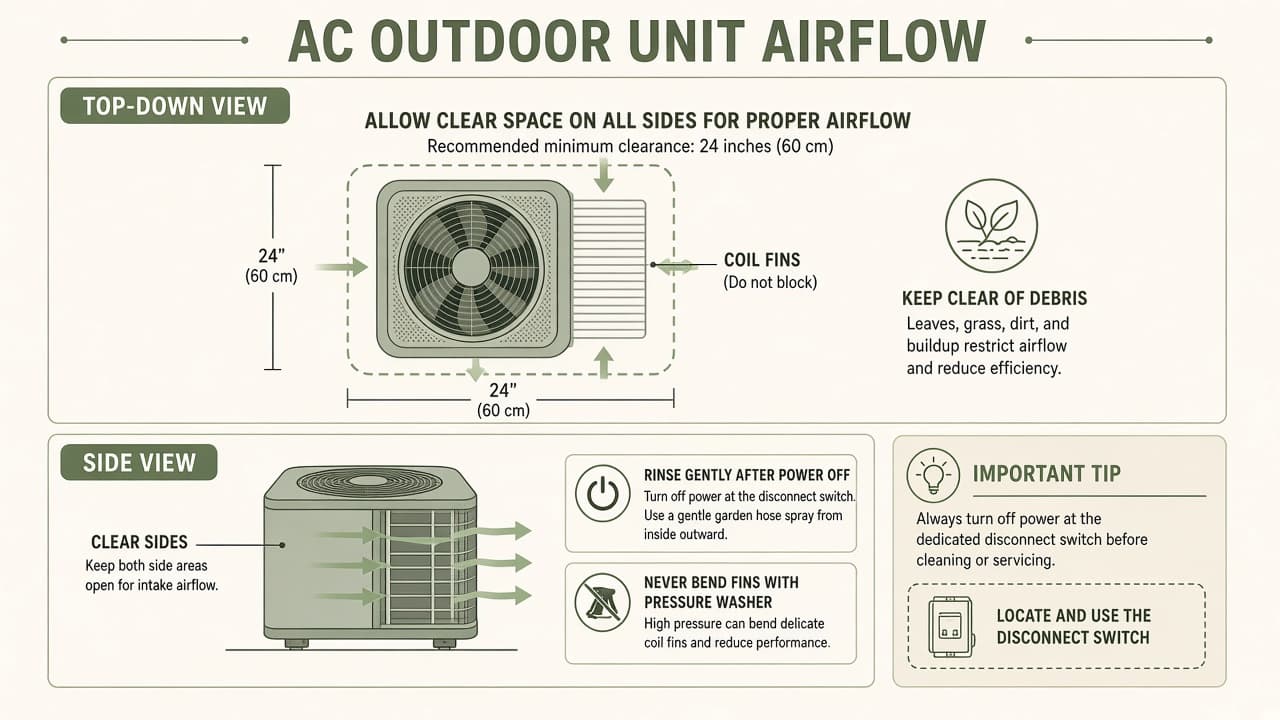
Pick up leaves, mulch, and branches around the cabinet. Trim vegetation to the clearance stated in the manual—often about 2 feet around the sides, with open space above—but use the manufacturer's requirement for your unit.
Do not bury the condenser base in new mulch or alter the pad. A tilted, sinking, or unstable unit needs professional attention because refrigerant lines can be stressed.
Step 3: Remove loose surface debris
Work from the outside of the cabinet:
- Pull away leaves that release without force.
- Use a soft brush in the direction of the fins.
- Vacuum cottonwood and dry lint with a soft attachment.
- Keep tools away from refrigerant tubing and wiring.
Do not push debris farther into the coil. If dirt is packed between multiple coil layers or the cabinet must be dismantled to reach it, schedule service.
Step 4: Protect the fins
Condenser fins bend easily. Minor bends are common, but broad flattened areas restrict airflow.
| Condition | Safe response |
|---|---|
| Light dust or loose fuzz | Soft brush or vacuum from outside |
| A few slightly bent fins | Leave them unless airflow is affected |
| Large crushed section | HVAC technician with the correct fin comb |
| Corrosion, oily residue, or damaged tubing | Stop and call for service |
An oily patch can indicate refrigerant oil escaping from the sealed system. Do not probe, tighten, or patch the tubing.
Step 5: Rinse only when appropriate
If the manual permits water cleaning and the electrical panel is intact:
- Use a garden hose on a gentle, broad spray.
- Keep the nozzle several feet back.
- Direct water through the coil without spraying into the electrical compartment.
- Work from top to bottom and let runoff carry dirt away.
- Stop if water backs up inside the cabinet or fins begin to move.
Some units require panels to be removed for a true inside-out rinse. Leave that disassembly to an HVAC technician. Never tip the unit or bend refrigerant lines to gain access.
What not to do
| Do not | Why |
|---|---|
| Use a pressure washer | It can flatten fins and damage the coil |
| Scrub across fins with a stiff brush | Thin aluminum folds easily |
| Remove the fan or electrical panel | Shock, capacitor, and moving-part hazards |
| Use bleach, oven cleaner, or acidic cleaner | Corrosion and coating damage |
| Open or disconnect refrigerant tubing | Refrigerant work requires certified service |
| Add “stop leak” or refrigerant | A leak must be diagnosed and repaired professionally |
Restart and check
Allow excess water to drain. Remove tools, verify that nothing is inside the fan area, replace any exterior guards you were permitted to remove, then restore the disconnect or breaker. Set the thermostat back to Cool and listen from a safe distance.
Stop the system if you hear grinding, see sparking, smell burning insulation, or the breaker trips. Cleaning will not repair electrical or mechanical faults.
When to call an HVAC technician
Drainage trouble at the indoor equipment is a separate issue; see how to clear an AC condensate drain line. Add the visual condenser check to your summer home maintenance checklist, and use the furnace maintenance guide for heating-season boundaries.
Bottom line
Condenser coil care is mostly about clear airflow and a light touch. Disconnect power, remove loose debris, protect the fins, and use only gentle water when the manual allows it. Leave internal disassembly, electrical work, and every refrigerant task to a qualified HVAC technician.
Frequently asked questions
- Can I use a pressure washer on AC condenser coils?
- No. A pressure washer can flatten delicate aluminum fins, drive debris deeper, and damage electrical components. Use low-pressure water only, following the equipment manual.
- Should I spray condenser coil cleaner on the unit?
- Plain water is often enough for routine homeowner maintenance. Some cleaners are corrosive or require thorough rinsing, so use one only when the equipment manufacturer permits it and the label specifically covers your coil material.
- Can I clean AC coils while the unit is running?
- No. Turn cooling off at the thermostat and disconnect power at the labeled outdoor disconnect or breaker before touching the unit or applying water.
- Do I need to add refrigerant after cleaning condenser coils?
- No. Cleaning does not consume refrigerant. Low refrigerant means the sealed system may have a leak and requires an EPA-certified HVAC technician.
Related guides
Why Is My AC Not Cooling? A Homeowner Troubleshooting Guide
AC blowing warm air or weak airflow? Use a symptom table for thermostat, filter, vents, condenser, frozen coil, and condensate—then know when to call HVAC.
How to Clear an AC Condensate Drain Line
Recognize a clogged AC condensate drain, make safe homeowner checks, and know when water or wiring calls for HVAC service.
Summer Home Maintenance Checklist: What to Check Before the Heat
Before peak heat: test AC, change filters, check drainage, and test safety devices. Summer tasks for cooling, exterior, and pro-only work.
Furnace Maintenance: What Homeowners Can Safely Do
Seasonal furnace maintenance homeowners can do—filters, thermostat, vents, return air, CO alarms—plus combustion warning signs and when to call HVAC.
This guide is for general informational purposes. Conditions vary by home, local codes, and equipment. See our disclaimer.