How to Winterize Outdoor Faucets
Disconnect hoses, shut off and drain outdoor faucets, understand frost-free models, and protect plumbing before freezing weather.
- Difficulty
- Beginner-friendly
- Time
- 15–30 minutes
- Est. cost
- $5–$25
- Season
- winter
By Keepstead Editorial Team · Published September 6, 2026 · 4 min read
Last reviewed September 6, 2026
Quick answer
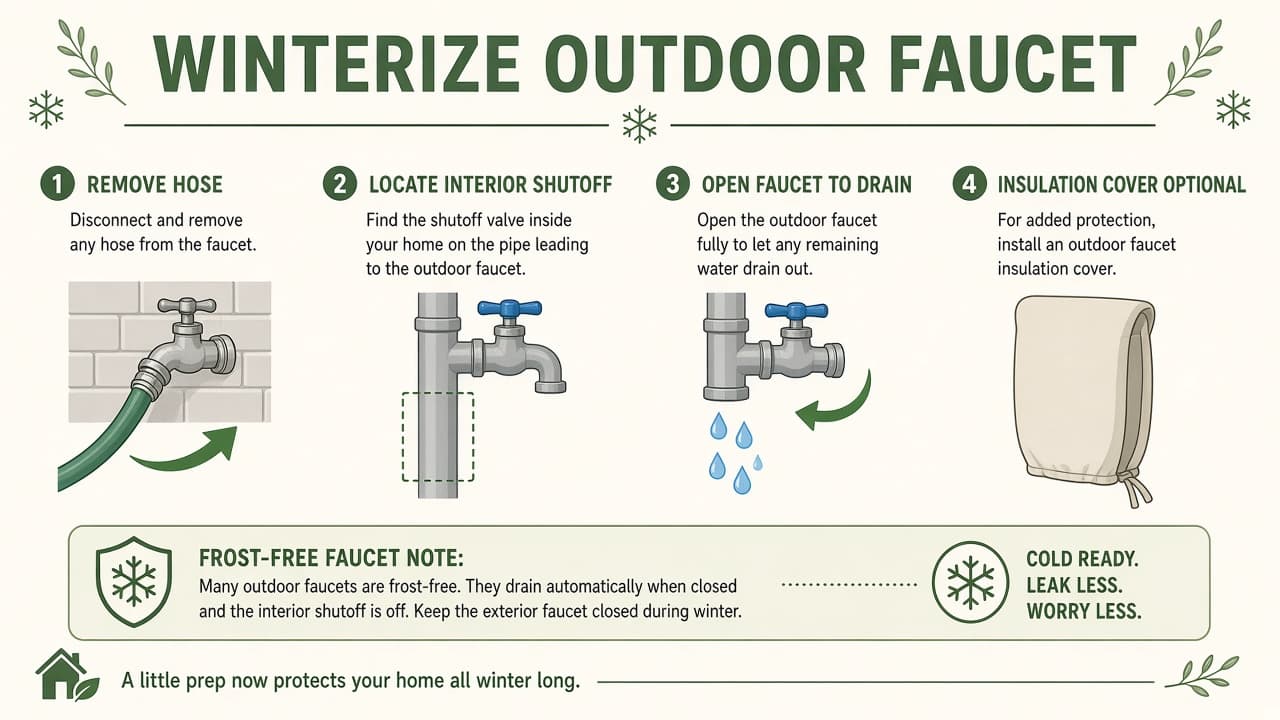
Before the first hard freeze, disconnect hoses and splitters, locate and close the dedicated indoor shutoff if your plumbing has one, open the outdoor faucet to drain the line, and use its bleeder cap if provided. Frost-free faucets still need hoses removed so they can drain.
Outdoor faucets are exposed to cold and often connect directly to plumbing inside an exterior wall. Winterizing removes trapped water and reduces freeze risk; it cannot compensate for a damaged valve, poor installation, or an unheated building.
Before you start
Locate the home's main water shutoff in case an old valve begins leaking. Then identify any dedicated interior shutoff that serves the outdoor faucet. The appliance and fixture shutoff guide explains common valve types and limitations.
Tools needed
- Bucket or towel
- Adjustable wrench only if a drain cap requires it
- Insulated faucet cover
- Flashlight
- Valve label or tag
Step-by-step
- Disconnect every attachment. Remove hoses, timers, splitters, spray nozzles, and quick-connect fittings. Drain and store them.
- Inspect the faucet. Look for drips, cracks, loose mounting, or water stains inside the wall or basement.
- Close the dedicated indoor shutoff, if present. Turn it gently by hand. Do not force a seized valve.
- Open the outdoor faucet. Let trapped water drain into a bucket or onto a safe exterior surface.
- Use the bleeder, if equipped. Some indoor stop-and-waste valves have a small drain cap. Follow the valve's instructions and protect finishes from water.
- Confirm drainage. Flow should stop after the isolated section empties. Continued flow may mean the wrong valve was closed or the shutoff is not sealing.
- Set the final valve position appropriately. Follow the faucet, valve, or local plumbing guidance; systems differ.
- Add a cover if useful. Fit an insulated cover snugly over the dry faucet as extra protection, especially on exposed walls.
- Label the shutoff. Make next season and emergencies easier.
Frost-free faucet notes
A frost-free sillcock closes several inches inside the heated building, while the outer tube drains. It works only when:
- Hoses and accessories are removed
- The faucet slopes slightly downward toward the exterior
- The vacuum breaker and internal parts are intact
- The interior area remains warm enough
If water drips inside the wall only when the faucet is on, the long tube may have split from a previous freeze. Stop using it and arrange repair.
Is insulation enough?
An insulated cover slows heat loss but adds no heat and does not drain the pipe. It is useful as a backup after normal winterizing steps, not a substitute for them. Pipes in crawl spaces, garages, or exterior walls may need broader measures from the frozen pipe prevention guide.
When to call a plumber
If a pipe has split or water is escaping, follow the burst pipe emergency steps immediately. Add this task to your winter home maintenance checklist.
Bottom line
Disconnecting hoses is essential for every faucet, including frost-free models. Where a dedicated shutoff exists, close and drain the branch carefully; use insulation only as supplemental protection.
Frequently asked questions
- Should I leave an outdoor faucet open after shutting off its indoor valve?
- After closing the dedicated indoor shutoff, open the outdoor faucet to drain trapped water. Whether it stays open afterward depends on the valve and plumbing design, so follow local or manufacturer guidance.
- Does a frost-free faucet still need winterizing?
- Yes. Disconnect every hose and attachment so the long valve body can drain. A frost-free faucet can still freeze if installed without proper slope, if a hose traps water, or if the unit is damaged.
- Do insulated faucet covers prevent freezing?
- Covers reduce heat loss but do not replace disconnecting hoses, draining vulnerable lines, or maintaining heat. Treat a cover as supplemental protection.
Related guides
How to Find Your Main Water Shutoff Valve
Locate your home's main water shutoff—basement, crawl space, slab, or meter—and know when to use it vs under-sink shutoffs before a leak emergency.
How to Prevent Frozen Pipes in Winter
Prevent frozen and burst pipes—insulate vulnerable lines, keep heat on, and know when to shut off water before a freeze.
Burst Pipe or Water Leak Emergency Checklist
What to do when a pipe bursts or water is flooding—shut off water, power safety near water, limit damage, and when to call a plumber immediately.
Winter Home Maintenance Checklist for Homeowners
Cold-weather prep: heating checks, freeze protection, safety devices, and exterior tasks—prioritized for homeowner-safe work.
This guide is for general informational purposes. Conditions vary by home, local codes, and equipment. See our disclaimer.